NDE/NDT
Advanced Ultrasonic Research Capabilities for Material Science
Verasonics’ Vantage NXT platform offers high-performance, programmable phased-array and multi-channel ultrasound systems for academic and industrial NDE/NDT research, development and inspection.
Featuring the patented NXT transceiver, specifically engineered to provide the next level of transmit and receive fidelity required for cutting-edge ultrasound research and inspection. This includes industry-leading performance in transmit power, arbitrary waveform generation, waveform coding, nonlinear imaging, and more.
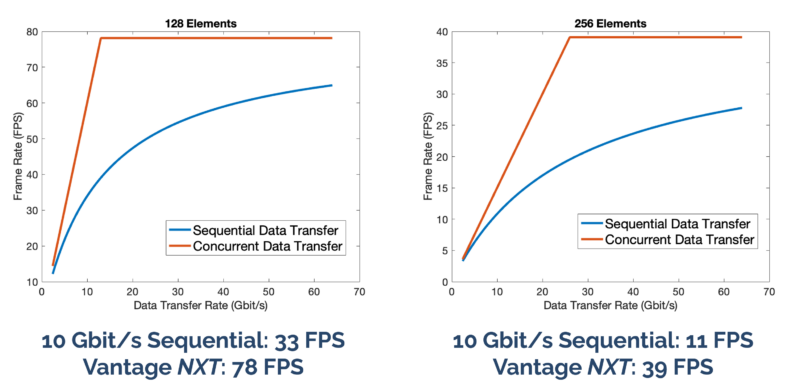
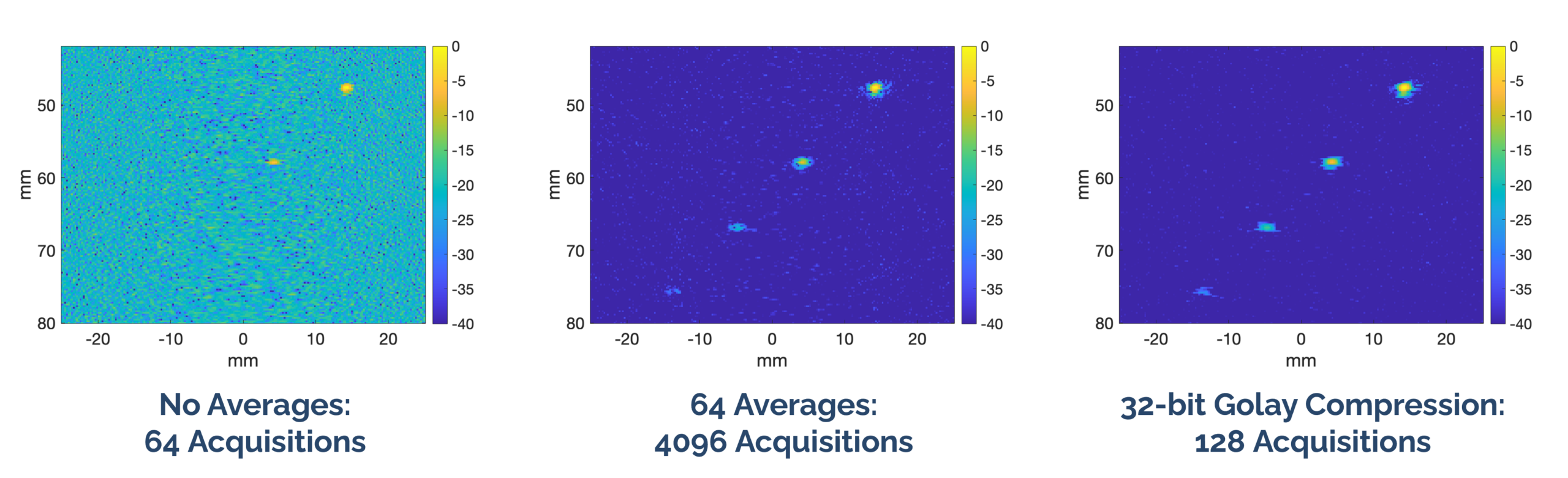
Additionally, Vantage NXT hardware and software architecture are designed to deliver the highest performance in acquisition speed, enabling continuous, uninterrupted data acquisition with scan speeds limited only by acoustic travel time.
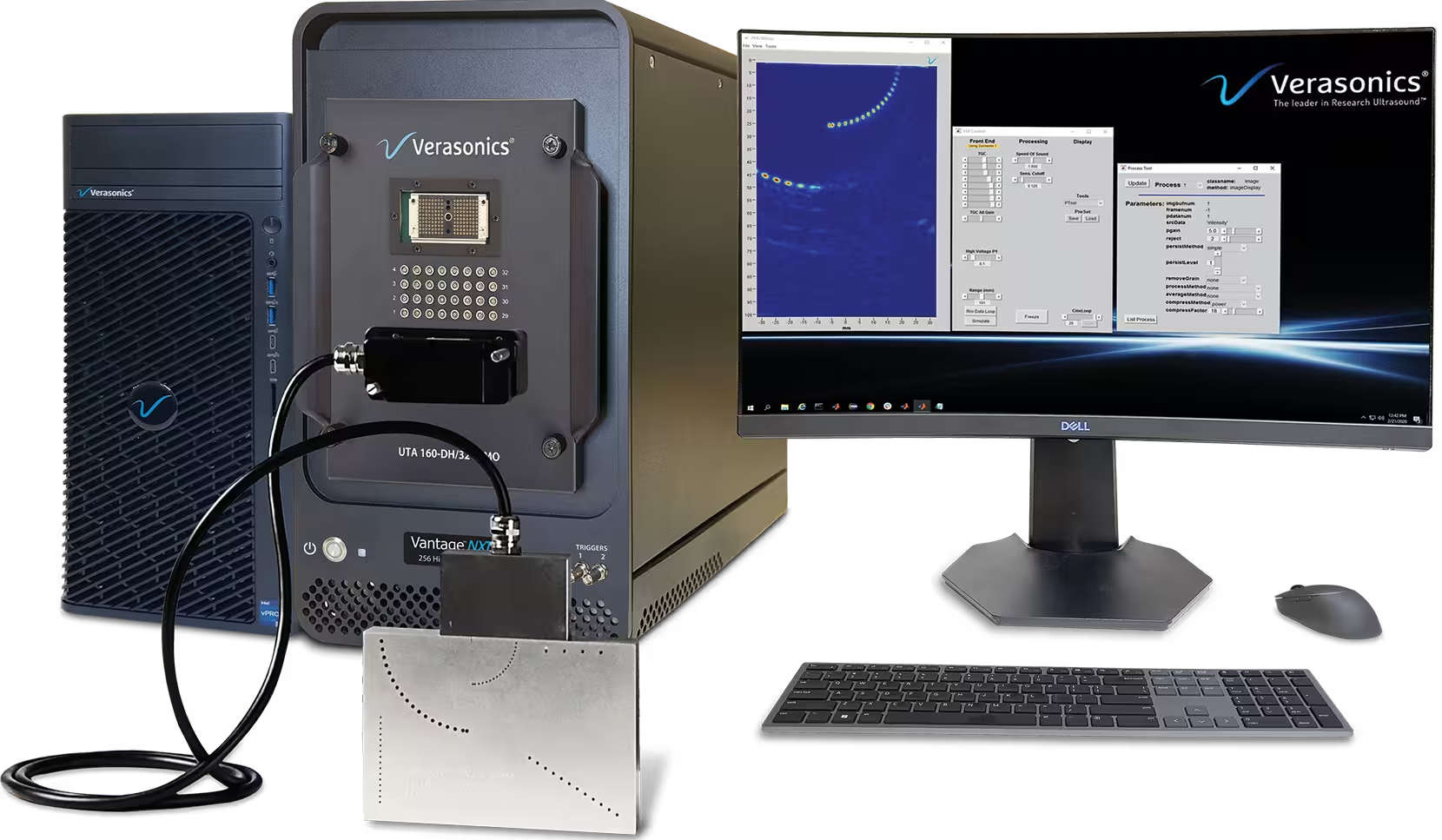
Vantage NXT with Imasonic transducer
Why Verasonics’ Systems for NDE/NDT?
Hardware Components
System configurations with 32, 64, 128, and 256 channels
Low-level programmability, with complete control of transmit and receive parameters at the channel level
Advanced tri-state transmitter:
-
- High-fidelity arbitrary waveform generation, with independent programmability per channel
- Extended transmit option for transmitting waveforms of several milliseconds in length
High-speed acquisition and data transfer:
-
- Data acquisition into local memory at more than 100,000 frames per second
- High-speed data transfer from the data acquisition system to a computer at up to 6.6 GB/s sustained
Frequency bandwidth options from 25* kHz to 60 MHz
Universal Transducer Adapter (UTA) system with a choice of adapters allows users to connect a broad range of commercially available or custom transducers.
* Note: Specifications are preliminary and subject to change without notice. Final product details are subject to change due to ongoing development and optimization.
Software Components
Intuitive sequence programming:
-
- Low-level programmability of the hardware is provided through MATLAB and C SDKs, enabling precise control of all transmit, receive, and sequence timing attributes
- The user may implement all data processing or, optionally, utilize a range of included signal processing, image reconstruction, display, and control functions
Image reconstruction option:
-
- Fast synthetic delay-sum beamforming, supporting TFM, plane wave, virtual source imaging, and more
- Image reconstruction on the order of 107 pixels per second using a standard, commercially available CPU
- User-programmable synthetic beamforming delays for easy implementation of accurate, high frame-rate imaging for custom applications
NDE Imaging software option:
-
- An easy-to-use, high-level graphical interface that complements the low-level user programmability
- Provides advanced real-time imaging and convenient data acquisition without the need for programming by the user
Applications & Techniques
The unmatched flexibility and configurable bandwidth make Vantage & Vantage NXT versatile platforms for multi-channel acquisition and analysis, ideal for a diverse range of techniques and applications, including guided wave tomography, acoustic trapping, and acoustic emission monitoring.
The Vantage platform comes with the broadest configurable bandwidth, ranging from 50 kHz – 50 MHz High frequency applications: The Vantage platform provides unique solutions for phased array imaging above 20 MHz (up to 50 MHz possible). A single Vantage system in the high frequency configuration offers a very broad bandwidth of 1 – 50 MHz Easy integration of arrays and/or sparse arrays consisting of multiple monolithic transducers with the many connector types supported by Verasonics’ Universal Transducer Adapters (UTAs) Fully programmable transmit, including arbitrary waveform transmission, enables beams steering and assist mode control with transducer arraysSupports all possible acquisition and imaging modes, from conventional B-scan, plane wave, virtual source and full matrix capture to cutting-edge ultra-high frame rate imaging and nonlinear imaging.
Extremely fast, user-programmable image reconstruction (on the order of 40 million pixels per second), combined with industry-leading data transfer rates (up to 6.6 GB/second sustained), provides users with a generalized high-speed TFM imaging framework. User-definable phase delay and amplitude-weighted lookup tables make it convenient to implement any arbitrary TFM inspection with industry-leading frame rates.
The video clip shows the real-time TFM imaging speed possible using the Vantage system. In this example, using 64 channels with 13,500 pixels per frame, the system achieves imaging at 35 frames per second.
Since 2009, Verasonics has been providing the benchmark research system for plane wave imaging and ultra-high speed ultrasonics imaging. There are more than 1000 research papers published on these topics using Vantage systems. Selected publications can be accessed here.
The figure above shows an example of how high-speed imaging with the Vantage system may be used to study the vibrational dynamics of cracks. By imaging using a stroboscopic approach with an effective frame rate of 180,000 fps, the real-time dynamic influence of modulating a fatigue crack with a 6.35 kHz elastic wave is observed.
A recent research trend has been the development of methods utilizing phased arrays to allow imaging of elastic nonlinearity. Elastic nonlinearity is a modality of interest in NDE for its sensitivity to macroscopic defects such as closed cracks and also the micro-structural material changes associated with damage precursors. Cutting-edge developments in nonlinear imaging necessitate high performance hardware, placing Vantage as an ideal platform for such research.
The Vantage platform provides excellent system linearity. The nonlinear diffuse energy imaging example demonstrates the upper limit of the system nonlinearity (the difference in output energy between full aperture and single element transmission), which is less than 0.5%. For methods using larger sub-apertures, such as the checkerboard approach, which use a half-array sub-aperture, the transmit nonlinearity is even smaller.
The Vantage system’s programmable tri-state pulser allows precise transmit bandwidth control, pulse inversion and multi-frequency pulse transmission for modulation methods. Pulse inversion can be used with two sequential transmissions to cancel linear terms by summation of the received data sets, directly producing a nonlinear residual.
Every Vantage system includes programmable analog and digital filters to optimize the receive bandwidth. Programmable multi-stage gains optimize the receive dynamic range for the small signal amplitudes common in nonlinear measurements.
The Vantage system supports amplitude modulation and sub-aperture transmission methods including parallel-sequential field subtraction techniques.
An example of cutting-edge nonlinear imaging development on the Vantage system is nonlinear diffuse energy imaging. This method measures elasticity nonlinearly through evaluation of later-time statistical diffuse energy rather than waves scattered coherently from the measurement point, providing complete separation of linear and nonlinear modalities. The precise control of the waveform provided by the tri-state transmitter increases achievable nonlinear measurement sensitivity, making Vantage the ideal system for application and development of this technique.
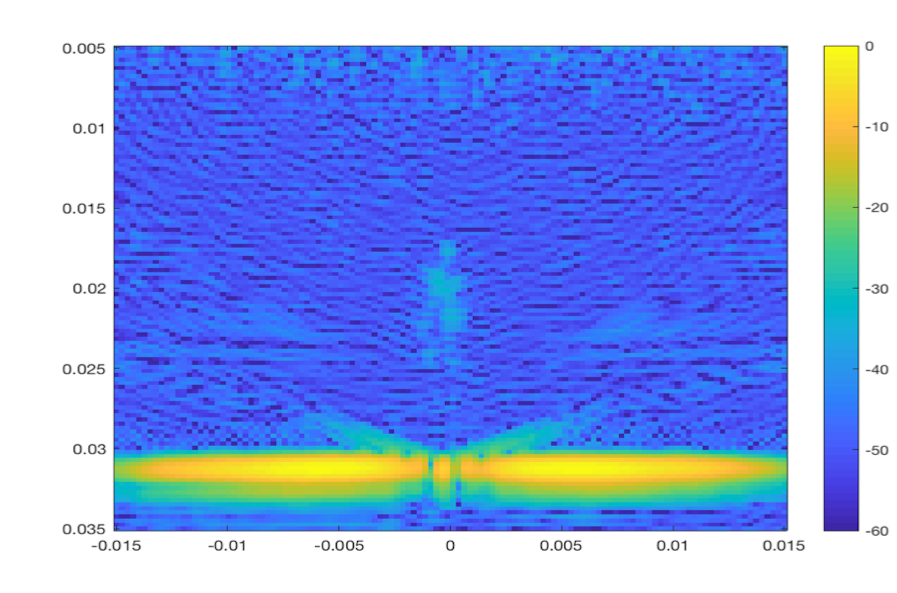
Linear Imaging: TFM
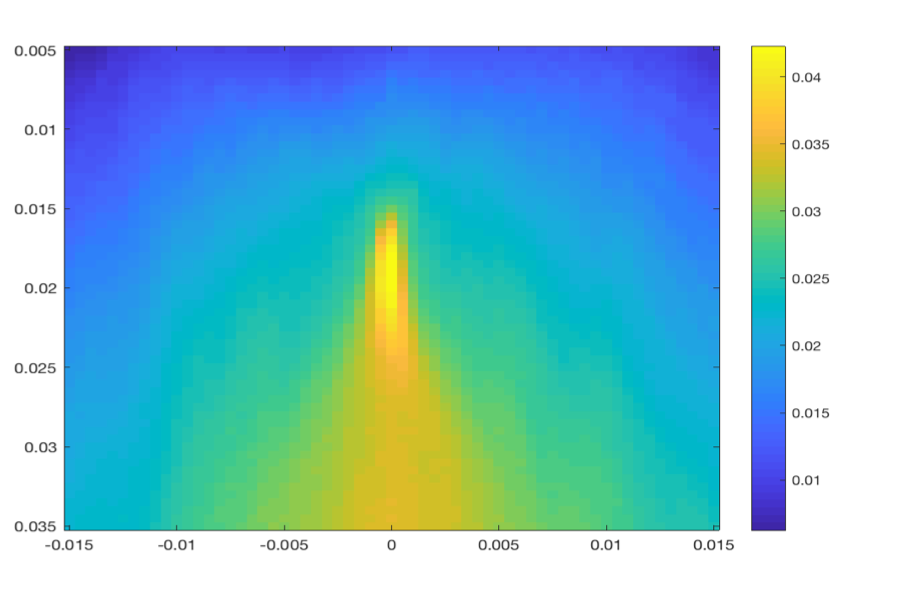
Nonlinear Imaging: Diffuse Energy
Shown above is an example demonstrating the benefits of nonlinear ultrasonic imaging using the Vantage system. Linear TFM and nonlinear diffuse energy images of a high-cycle fatigue crack within an aluminum compression test specimen acquired using a 5 MHz 64-element array (Imasonic). The nonlinear image is seen to eliminate the linear back-wall and coherent noise features and more precisely resolve the size of the closed crack tip.

The Vantage platform provides a generalized high-speed volumetric imaging framework with real-time orthogonal plane displays by combining ultra-high-speed frame rate data acquisition (up to 100,000 FPS), ultra-high-speed data transfer (up to 6.6GB/s sustained) and ultra-high-speed image reconstruction (on the order of 40 million pixels/s).
Vantage systems support arrays of any configuration and geometry, including regular, sparse apertures, matrix and row/column arrays, convex and concave, random or custom
The Vantage platform currently supports emerging new technologies with potential for cost reduction:
- Arrays with (random) sparse apertures using multiplexers
- CMUT technology, an economical solution for high-element count matrix arrays
- Row-column arrays that provide high image quality, yet require fewer system channels
The Vantage system offers flexible solutions to interface high-element-count transducers with different system configurations as shown below.