
Biomedical
The Leader in Research Ultrasound for Biomedical Applications & Techniques
Vantage NXT Research Ultrasound Systems deliver outstanding performance and unparalleled flexibility, enabling a wide array of ultrasonic research applications in biomedical sciences. With state-of-the-art hardware and software, Verasonics Systems can be used as a data acquisition device with superior signal quality, as a platform for developing and testing new transducers, or as a programmable tool for investigating new ways to examine and manipulate tissues.
Researchers across the globe frequently publish groundbreaking advancements made with this technology, and Verasonics solutions are often cited in Scientific Publications.
Whether your research interests require high-speed data acquisition, precisely controlled energy delivery, high channel count for volume imaging, or a wide frequency range, Verasonics Systems is the ideal platform to enable your investigations more quickly and cost-effectively than other commercial or purpose-built solutions.
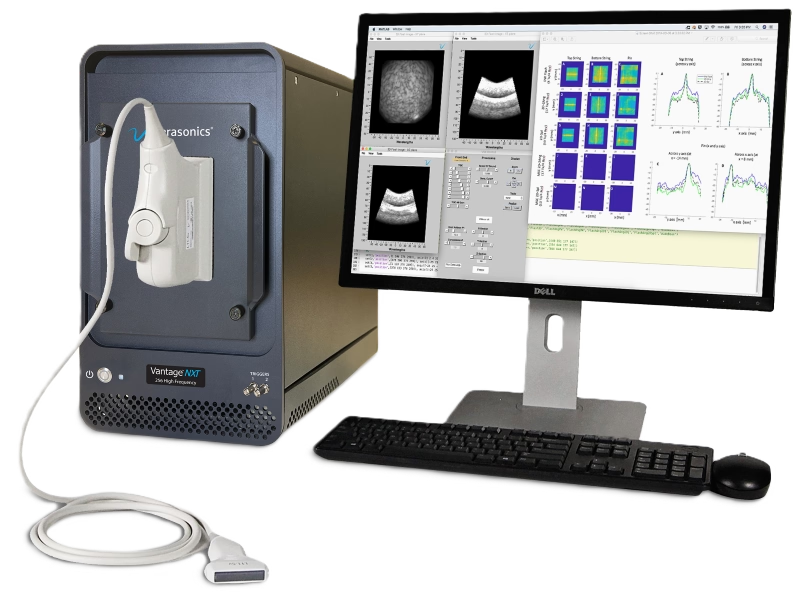
Vantage NXT Research Ultrasound System
Applications in Biomedical Research using Verasonics’ Systems
New algorithm development for beamforming and image reconstruction
Acoustic radiation force techniques (ARFI), including Shearwave elastography, tissue manipulation, and more, are enabled by Verasonics’ Extended Transmit Capability
Focused Ultrasound (FUS) research, including HIFU, Cavitation, enhanced drug delivery, neuromodulation, and other energy delivery techniques
Functional Ultrasound Imaging to examine blood flow dynamics in the brain, utilizing the ultra-high-speed data acquisition capability
Development of new techniques and applications using micro-bubble contrast agents
Verasonics Systems are ideal platforms for developing cutting-edge Artificial Intelligence (AI) technologies for all aspects of ultrasound-based applications, to study image optimization, and more
Photoacoustic research that synchronizes data acquisition from the interactions of laser light with tissues
3D and 4D Volume imaging to interrogate tissues for perfusion and other transient changes
Preclinical imaging with high-frequency transducers
Transducer development and new product development
Commercial technology licensing of Verasonics’ technology for use in a commercial product
As a teaching platform for instruction in physics, acoustics, signal processing, and more
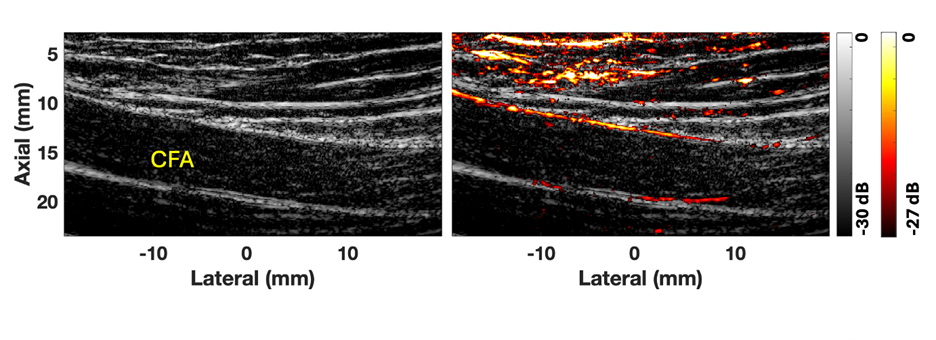
Why Vantage NXT Systems?
Biomedical Applications Gallery
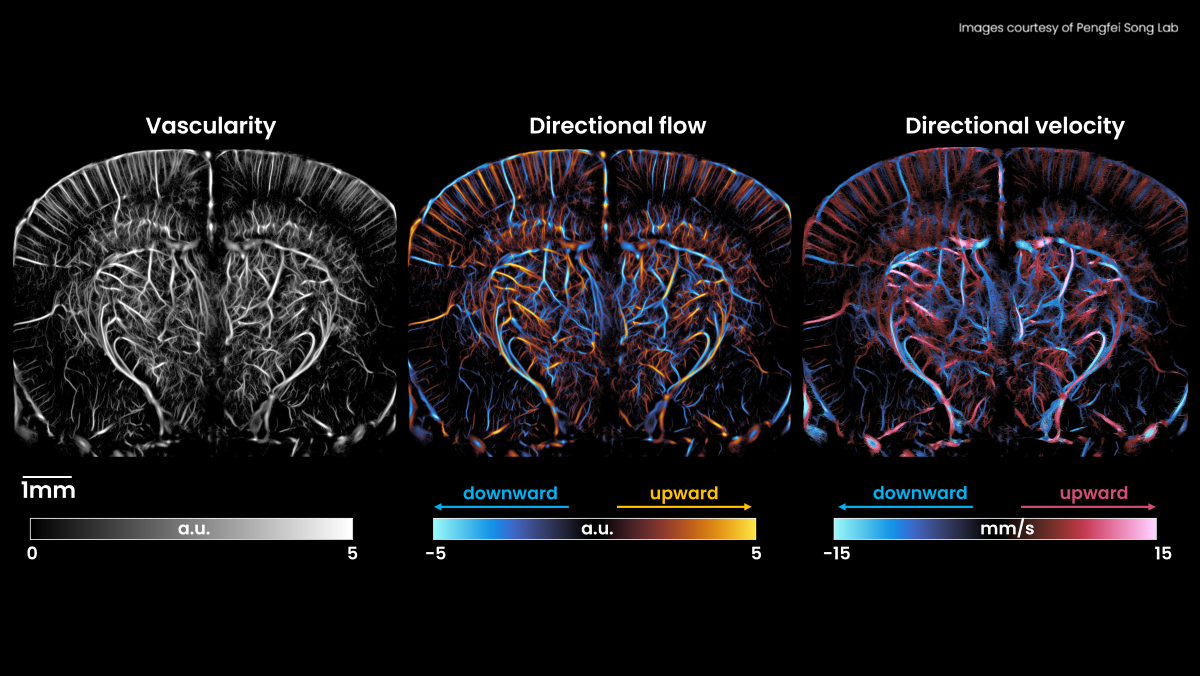
ULM L35-16vX NXT
ULM on a mouse model using the L35-16vX (28 MHz) transducer. Images of Vascularity, Directional Flow and Directional Velocity
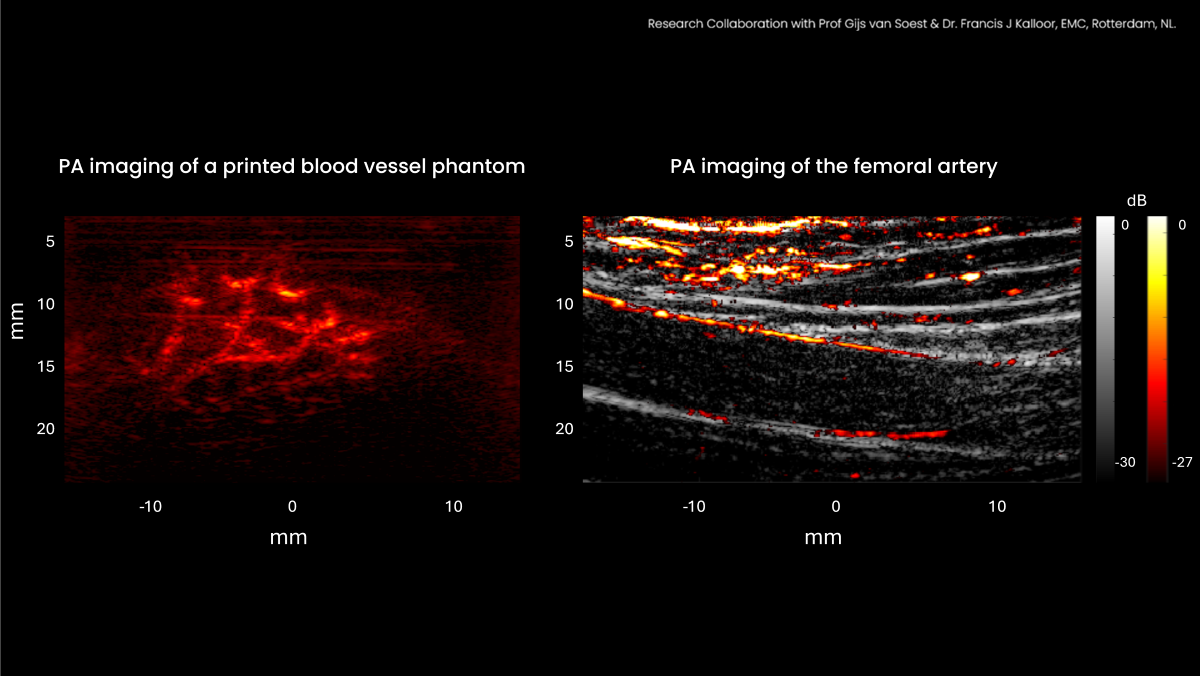
Photoacoustic Imaging
Vantage NXT supports Receive-only mode fundamental for Photoacoustics (PA) imaging. It also supports interleaving of B-mode and PAI
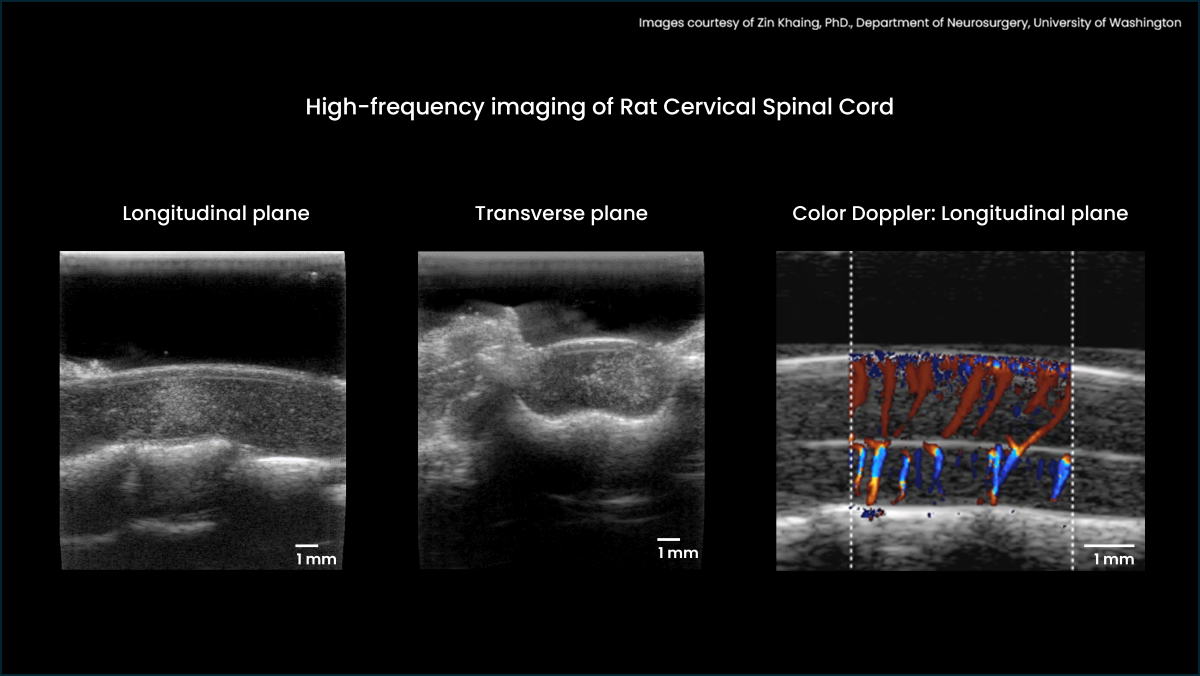
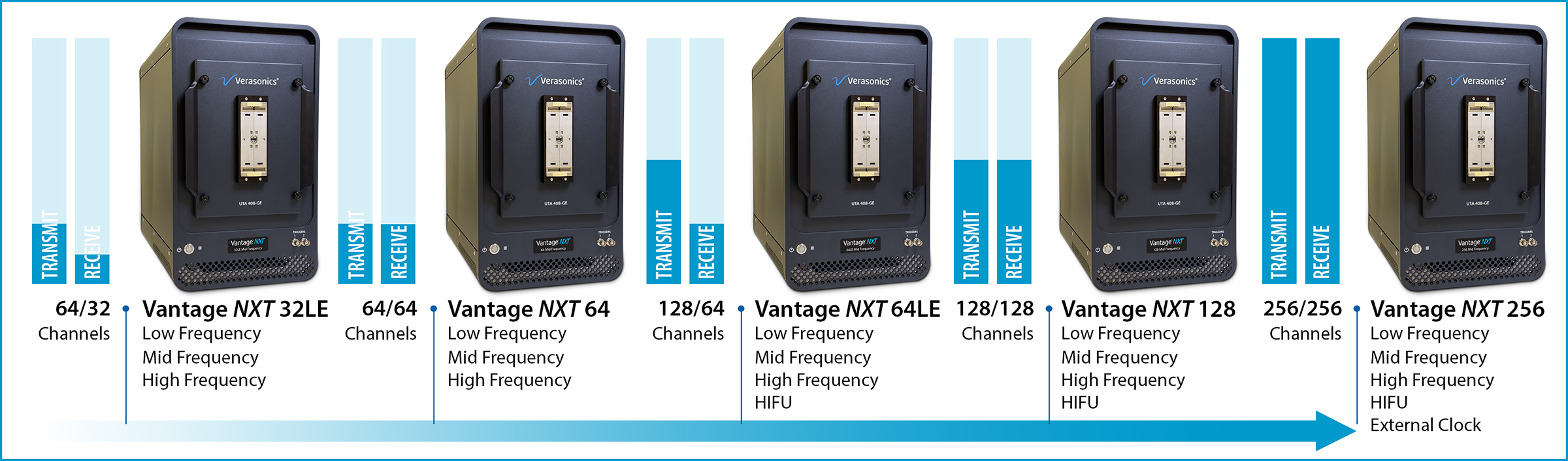
High frequency B-mode and Color Doppler images
High frequency B-mode and Color Doppler images of a rat cervical spinal cord after a contusion. These images were acquired with a L35-16vX (28 MHz) transducer using the Optimized Image quality scripts
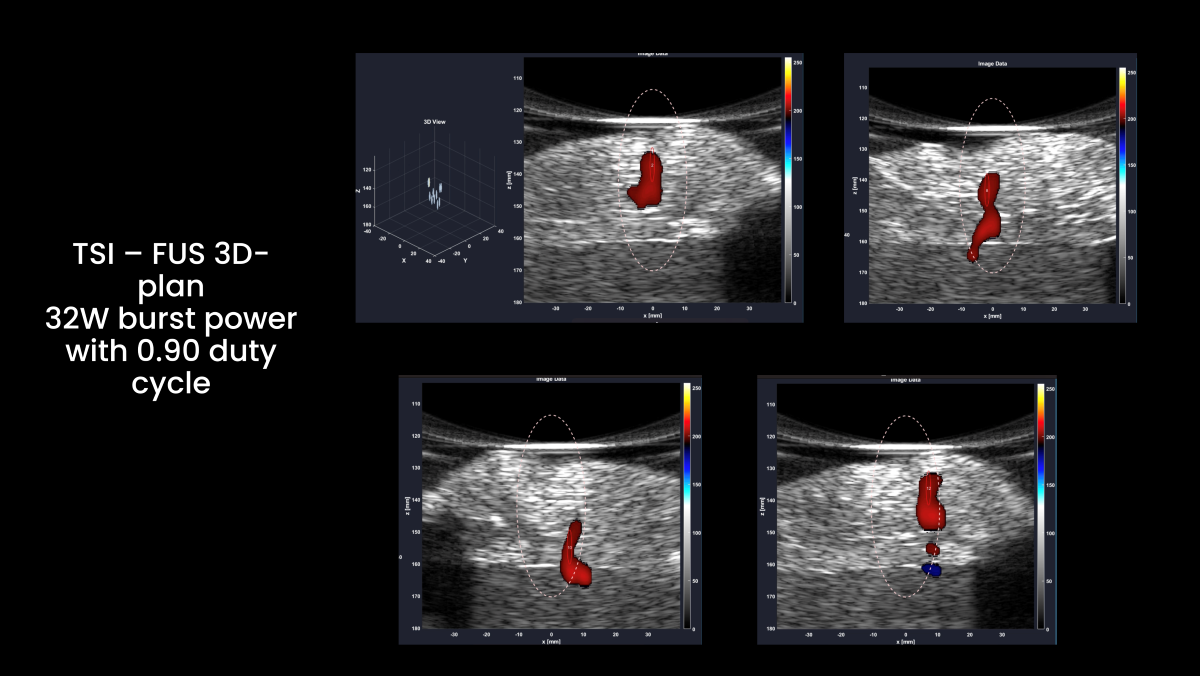
Thermal Strain Imaging (TSI) – FUS3D
3D real-time procedure using HIFU bursts at a PRF of 1Hz, 32W total acoustic burst power, with a 90% burst duty cycle in an ex vivo chicken breast tissue. Twelve different focal exposures were applied within a volume. The TSI images represent an increase in temperature (heating) during HIFU treatment at different locations.
Optimized High-Frequency Imaging for Preclinical Targets
Optimized acquisition sequences on the Vantage NXT have also been developed for high-frequency probes, both for B-mode and Doppler Imaging.
High Frame-Rate Imaging
Contrast echocardiogram acquired at 5500 frames per second.
Video courtesy of Mengxing Tang. Imperial College London.
ULM Imaging with 1024 MUX UTA
Three-Dimensional ULM on a rat model using a 3 MHz matrix transducer using a Single Vantage system with the 1024 MUX UTA.
Video courtesy of Pengfei Song Lab.
Live Tumor Visualization with Gas Vesicles
Live tumor visualization using xAM (cross amplitude modulation) acquisition combined with gas vesicles (GVs) on a mouse model.
Video courtesy of David Maresca. TU Delft.
Vantage NXT and Vantage Research Ultrasound Systems are laboratory research and/or development platforms; they are intended to be used to acquire, store, display, and analyze ultrasound data; they are not approved for clinical use.
Users must perform additional testing to comply with local regulatory requirements for clinical use.